China’s increasingly assertive behavior toward Japan has attracted surprisingly little public attention in the United States. By contrast, throughout the Indo-Pacific, Beijing’s renewed “wolf warrior” diplomacy and provocative behavior are again raising anxieties about its regional intentions. Washington’s seeming indifference has only further increased this concern and reinforced global perceptions of America turning inward.
Undoubtedly, Chinese Communist Party Chairman Xi Jinping wants to test Sanei Takaichi, Japan’s new Prime Minister, early in her tenure. Takaichi has responded just as might be expected from an admirer of Margaret Thatcher and protege of former Japanese Prime Minister Shinzo Abe, showing no signs of retreat from Tokyo’s long-standing positions. Soon after taking office, Takaichi brought forward by two years, to fiscal 2025, the goal of increasing Japan’s defense expenditures from 1% to 2% of GDP. She also expressed openness to modifying Japan’s “three no’s” policy on nuclear weapons (no possession, no production, and no introduction of nuclear weapons into Japanese territory) because of the risks posed by China, Russia, and North Korea.
TRUMP SLOWS BLEEDING OF INDEPENDENT VOTERS: WHITE HOUSE REPORT CARD
China has long tried to unnerve Japan by sailing naval vessels, described as “fishing boats,” near the Senkaku Islands, claimed and occupied by Japan, but also claimed by China as the Diaoyuti Islands. More recently, Chinese vessels ramped up their aggressive behavior by entering the territorial waters of Japan’s home islands. Then, on Dec. 6, Chinese fighter planes “locked on” their targeting radar to Japanese planes in international airspace. Since “locking on” could signal hostile intent to destroy the targeted aircraft, such behavior is considered reckless or even belligerent. Defense Minister Shinjiro Koizumi and U.S. Defense Secretary Pete Hegseth spoke about the incident on Dec. 12, and Japan’s readout said they agreed that China’s behavior raised “grave concerns” and was “deeply troubling.” Worryingly, the Pentagon’s readout did not mention the Dec. 6 incident.
Takaichi has also taken a tough public line against Chinese threats to Taiwan. On Nov. 7, responding to a question in parliament, she said that Chinese attempts to invade or blockade Taiwan would constitute a “survival-threatening situation” for Japan, which would justify responding with military force. Takaichi’s remarks were likely unscripted and more candid than some liked, but substantively, she simply voiced what most Japanese believe, reflected by strong support in public-opinion polls. Her now-deceased predecessor Shinzo Abe said essentially the same thing five years ago.
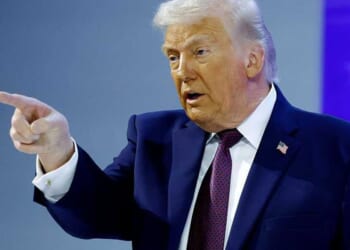
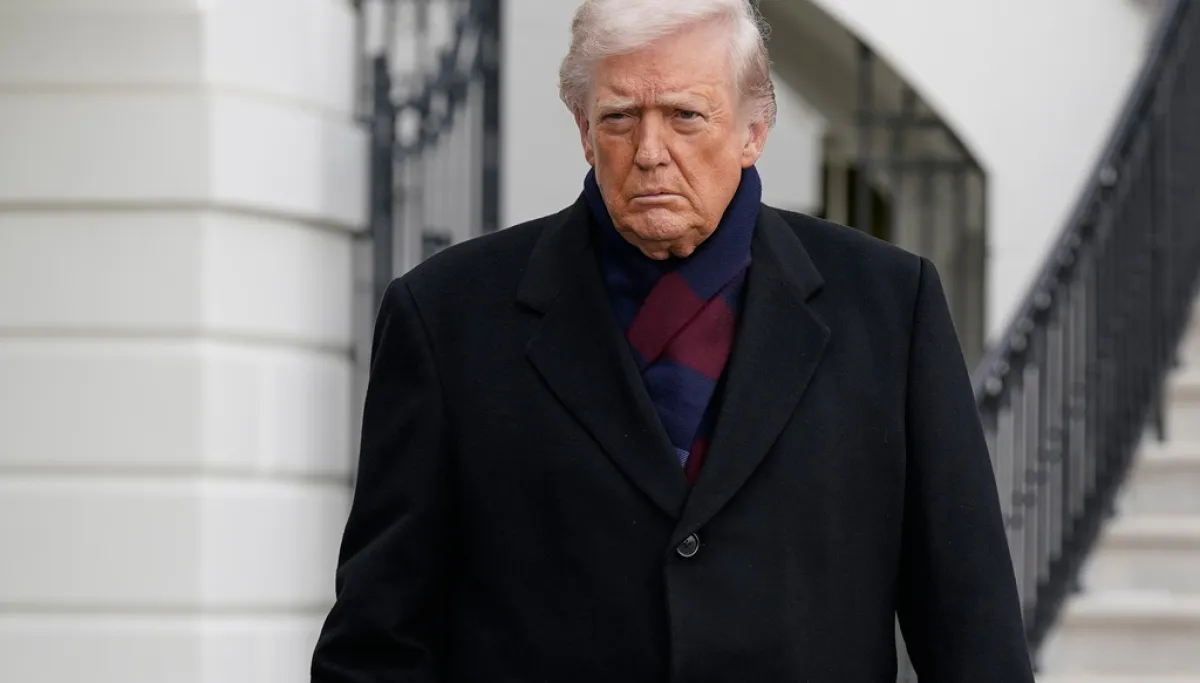
Nonetheless, Xi was mightily irritated by Takaichi’s comments. China’s Foreign Affairs Ministry quickly warned its citizens not to take tourist trips to Japan because they might not be safe. That was just the start, followed by increasingly aggressive military steps, as noted above. Then, for 30 minutes of an hourlong phone call with President Donald Trump on Nov. 24, Xi pounded hard on China’s Taiwan policy. Xi was surely delighted to learn that, almost immediately after this call, Trump called Takaichi to discuss Taiwan. The Wall Street Journal reported that Trump had urged Takaichi to display greater circumspection on Taiwan, exactly what Xi wanted. The President’s urge to address Xi’s complaint embodies his view that state-to-state relations are almost entirely defined by the personal relationships between their leaders.
This is the real fear in Japan, Taiwan, and around the Indo-Pacific. Dating back to his first term, Trump is so obsessed with making “the biggest trade deal in history” with China that he wants nothing else to interfere. This feeds into Taiwan’s widespread alarm that, in negotiating a U.S.-China trade agreement, Trump might surrender crucial points on Taiwan that would endanger its de facto independence from China. Even minor changes in Washington’s formulation of the Taiwan-China relationship, originating in the 1972 Shanghai Communique, which Trump might deem trivial, could have major negative repercussions for Taiwan.
The administration’s just-released National Security Strategy is a far cry from his first-term strategy on China, and by comparison makes even the Biden administration look hard-line. Trump is going out of his way to conciliate Beijing prior to his April visit to China, where he likely hopes to sign his dream trade deal. He has, for example, lifted export controls on exporting Nvidia’s sophisticated H200 chips to China, and dramatically reduced threats of tariffing Chinese exports to the United States, all of which gravely concern countries in the Indo-Pacific. And watching how Trump has vacillated on his Ukraine policy from the outset of his second term can only concern our Asian allies as well.
NETANYAHU SAYS HE WARNED AUSTRALIA OF POLICIES FUELING ‘ANTISEMITIC FIRE’ MONTHS BEFORE SHOOTING
Almost certainly, what happens between now and Trump’s China trip in April will define Beijing-Washington relations well into the future, and deeply affect how America’s allies worldwide view our resolve and dependability.
They have significant reason to be concerned.
John Bolton was the national security adviser to President Donald Trump between 2018 and 2019. Between 2005 and 2006, he was the U.S. ambassador to the United Nations.