Order Michael Finch’s new book, A Time to Stand: HERE. Prof. Jason Hill calls it “an aesthetic and political tour de force.”
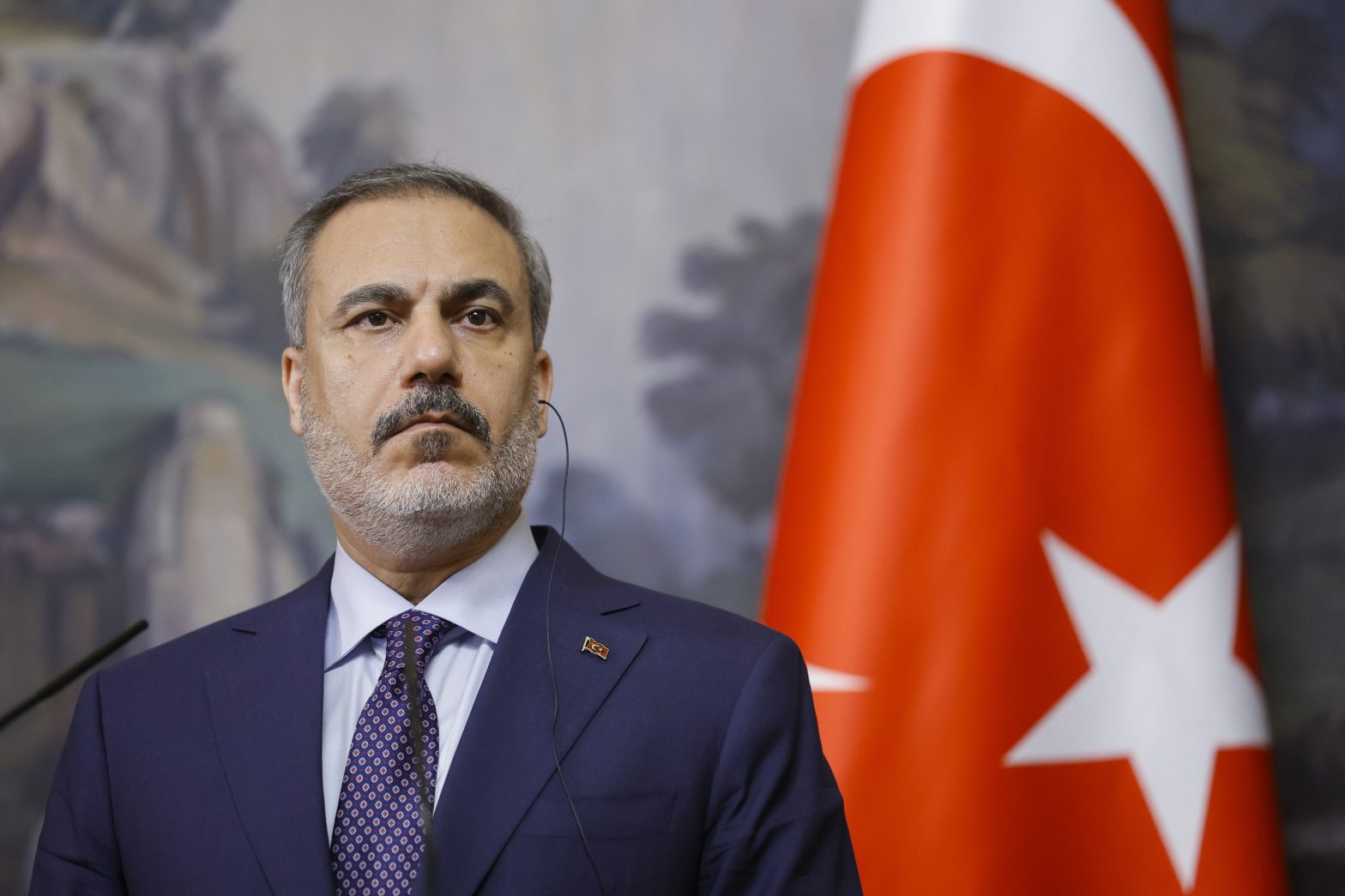
Turkish Foreign Minister Hakan Fidan is often touted as a successor to President Erdogan and has again and again viciously attacked Israel for defending itself. On November 30, while in Iran, Fidan labeled Israel as “the biggest threat to stability in the Middle East” just as he bragged about seeking to significantly expand Turkish cooperation on issues such as energy, trade, border protection, and Middle East security needs with Iran.
In August Fidan said “Israel’s reckless attacks on Gaza, Lebanon, Yemen, Syria, Iran is clearest sign of terrorist state mentality defying international order” and said Israel has been “committing genocide in Gaza for the past two years, ignoring basic humanitarian values right before the world’s eyes.”
The success of any future “International Stabilization Force” in Gaza hinges on one principle: genuine neutrality. Without it, no peacekeeping mission can function. That is why the question facing U.S. officials today is urgent and unavoidable: should Turkey be permitted to deploy troops to Gaza as part of force?
The deployment of Turkish soldiers to Gaza as part of a future International Stabilization Force for Gaza should be a non-starter for U.S. diplomats and mediators. It is time for the American government to realize that nations that have a documented history of providing Hamas with a safe haven, political support, financial aid, and/or material assistance must not be granted any role in rebuilding Gaza.
While Turkey presents itself as an U.S. ally and a NATO member with regional influence, this nominal status cannot override its clear and well-documented ties to Hamas. These ties make Turkey fundamentally unfit for any peacekeeping role—especially when Fidan’s anti-Israel extremism is taken into account.
Perversely, Turkey has long viewed Hamas as a “liberation movement” and does not designate Hamas as a terrorist organization. These facts alone should rule out Turkey from having any role in Gaza.
The urgency of this issue is increasing. According to news reports Turkey is preparing an army brigade of approximately 2,000 soldiers that it seeks to deploy in Gaza. If these preparations move forward, the United States will soon confront a consequential policy choice.
Here are some additional reasons for objecting to Turkish army troops in Gaza:
Hamas has used Turkey as a hub to coordinate terrorist activities, recruit terrorists, and manage extensive financial networks involving real estate and other businesses. Both U.S. and Israeli security services have uncovered numerous plots and financial operations tied to Hamas activities on Turkish soil.
These operations did not occur in a vacuum; they reflect a sustained political and logistical embrace. Since 2011, Turkey has hosted senior Hamas leaders following the Gilad Shalit hostage for prisoner swap with Israel. High-ranking Hamas officials have frequently met with Turkish President Erdogan and Turkish intelligence. Some senior Hamas terrorist leaders, including former leader Ismail Haniyeh (prior to his being killed in July 2024) have even been granted Turkish citizenship.
The ideological alignment is equally troubling. The AKP—Turkey’s ruling party—and Hamas share ideological roots in the Muslim Brotherhood. President Erdogan is a vocal critic of Israel’s response to the October 7 Hamas-led terrorist invasion of Israel and he has used his platform to offer political support to Hamas in the international arena.
This record makes an effective peacekeeping role impossible. Peacekeepers must be trusted by all sides if they are to function effectively. Given Turkey’s history, Israel cannot reasonably be expected to view these soldiers as neutral actors. Nor should the United States do so.
Washington therefore faces a clear responsibility. If the United States wants a credible, functional, and truly stabilizing international mission in Gaza, it must make clear that no force involving Turkey will receive American diplomatic, financial, or military support. A peacekeeping force cannot include a nation that has helped the very terrorist group it is meant to neutralize.
Moshe Phillips is national chairman of Americans For A Safe Israel (www.AFSI.org), a leading pro-Israel advocacy and education organization.