If your workplace says you must call a man in a dress by the pronouns “she/her,” you can say “No,” according to the lawyers at the Alliance Defending Freedom (ADF).
This has happened twice to Betsy Sayre of Tunkhannock, Pennsylvania, once in 2022 when she was able to resolve it on her own, and again in 2024. But a strongly worded letter from ADF to her company has now resolved it for good.
Sayre has enjoyed working at BKV Corporation, an energy company, since 2017. But in 2022, BKV introduced a new DEI policy, which said:
“An employee has the right to be addressed by the name and pronoun of the employee’s choice…. An employee’s coworkers are expected to be respectful of the employee’s choice and to use [the] name and pronouns requested by the employee. Intentional use of the employee’s former [n]ame and/or pronoun is a violation of this Policy and may constitute unlawful harassment.”
But what about Sayre’s right to live out her Christian faith?
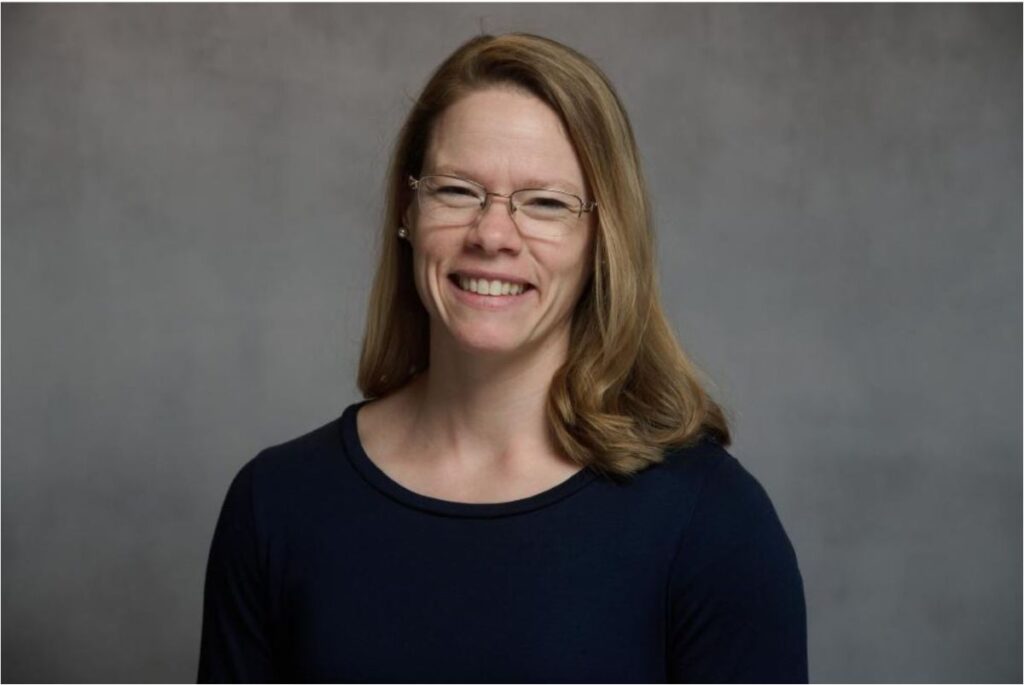
Image CreditCourtesy of Betsy Sayre
“I believe that every person is created in the image of God, and I want to treat them with love and with dignity and with honesty and with respect,” Sayre told The Federalist in an interview. “As part of that, I believe that God created two distinct biological sexes, male and female, and for me to use pronouns inconsistent with someone’s biological sex would require me to affirm something to them, and about them, that I know to be untrue. And to affirm a lie to them, would not be loving, would not be treating them with dignity. It was just something I’m not willing to do — to further an ideology that is ultimately harming them.”
It would be quite serious to have harassment on her employee record. Sayre asked for religious accommodation and in September 2022, BKV granted it, excusing her from signing the DEI policy. They did not hammer out details like how they would handle it if a coworker asked to be called by pronouns inconsistent with his or her sex.
It is worth noting that from 2017 to the present, no employee in Sayre’s office has asked for pronoun accommodation. It has all been about the policy.
“Part of my motivation in this is knowing that there’s another generation of Christians coming behind me, and if I am not willing to stand up for truth today, then I have just made their battle that much harder, as they have to face these sorts of things in the future,” Sayre said.
After its initial public offering in 2024, BKV required employees to take the online harassment training again. It ends when the employee clicks an agreement certifying she understands and “will comply with all legal requirements and company policies and procedures discussed in this training,” the ADF letter recounted.
While Sayre understood the training, she could not agree to comply, so she sent an email to human resources, including her 2022 accommodation letter, and again asked for religious accommodation.
But the company said no. Now that it was a publicly traded company, it required 100 percent compliance with the “Code of Conduct and Anti-Harassment training,” according to the letter. They gave her a deadline to agree to the policies.
Sayre is willing to call someone by their chosen name and avoid using any pronouns for them, but she won’t lie and promise to call someone a sex that they are not.
“Betsy Sayre has a legal right to a religious accommodation,” ADF Legal Counsel Logan Spena wrote in the letter. “Any adverse action taken against her because of her refusal to certify that she will engage in speech or conduct against her religious observance violates Title VII of the Civil Rights Act of 1964 and the Pennsylvania Human Relations Act.”
Spena told The Federalist that ADF sent one letter to BKV and the company’s attorneys responded with a letter granting the accommodation. From there, they worked out a few details within a few days.
“It was handled well,” Spena said. “I don’t at all see BKV to be a bad actor here … I think they should be commended for doing the right thing in the end and not having to go through litigation, or EEOC complaints, or anything like that.”
Spena said employees who are facing this issue — being asked to sign a similar agreement, or to call someone by pronouns that don’t match their sex — should be like Sayre, “Stand for truth,” and get some help from ADF or another attorney. He said Many companies have misconceptions about how to navigate this.
Sayre says resolving the issue took a huge weight off her shoulders.
“Truthfully, I really like my job. I really like my workplace. It’s been such a good place to work, and I just really don’t want to leave it.”
“I have been profoundly grateful for ADF and for Attorney Spena in standing with me and advocating for me,” Sayre said. “If there is one encouragement I could give to somebody else who is in a similar situation, it’s, have courage to stand for what’s right, because in the end, truth wins.”
Beth Brelje is an elections correspondent for The Federalist. She is an award-winning investigative journalist with decades of media experience.