President Donald Trump launched a website in line with his vision for a federal visa program that admits thousands of immigrants to the United States every year.
In February, Trump revealed his intention to create a “gold card” that could be sold to immigrants for a high price, afford them work privileges, and give them a path to citizenship. The plan modifies the EB-5 immigrant visa program, which afforded over 12,000 foreign investors legal entry into the country during fiscal 2024.
On Wednesday, gold card program went live on the website, allowing individuals and businesses to apply for the visa. To obtain one, an immigrant must pay a $15,000 DHS processing fee, a contribution of $1 million, and go through a background check. To obtain a “corporate gold card,” a business must pay $2 million and a 1% annual maintenance fee in addition to the processing fee. A business is able to transfer access to visa between employees if they pay a 5% transfer fee.
The website also says a “platinum card” is coming soon, with a $5 million price tag plus a $15,000 processing fee, that will allow immigrants “the ability to spend up to 270 days in the United States without being subject to U.S. taxes on non-U.S. income.” Interested individuals are able to join the wait list for the program.
Why the gold card? And how would it work?
The president teased the gold card, which he calls “the Trump card” and has his image emblazoned on the front, for months before the program went live. When he showed off the first card printed in early April, Trump hoped the new visa program would be live within two weeks.
The Commerce, Treasury, and Homeland Security departments are spearheading the gold card program, which Trump has characterized as a premium version of the green card.
During a Cabinet meeting with Trump in February, Commerce Secretary Howard Lutnick said he was working with Homeland Security Secretary Kristi Noem to integrate the gold card policy into the EB-5 program. Treasury Secretary Scott Bessent worked in tandem with the Commerce Department to design a new model for the EB-5 program, according to Lutnick. Under the new terms, foreign applicants are able to obtain a license from the Commerce Department for the gold card. The card is open to noncitizens, and sets the holders who pass a thorough background check on a path toward citizenship, with their payments going directly to the Treasury.
TRUMP TRIES TO DIFFUSE TALK OF MUSK TENSIONS AT FIRST CABINET MEETING
One of the primary purposes of the gold card program is to bring in funding to pay off the federal debt, which sits at $36 trillion. Lutnick said the program could raise upwards of $1 trillion at the Cabinet meeting.
“That’s why the president is doing it, because we are going to balance this budget. We are going to pay off the debt under President Trump,” the commerce secretary said.
Sponsors, including companies such as Apple, could also buy gold cards on behalf of foreigners, Trump said.
“I get calls from, as an example, companies where they want to hire the No. 1 student at a school. Person comes from India, China, Japan, lots of different places. And they go to Harvard, the Wharton School of Finance, they go to Yale,” the president said. “And they make job offers, but the offer is immediately rescinded because you have no idea whether or not that person can stay in the country. I want to be able to have that person stay in the country. These companies can go and buy a gold card, and they can use it as a matter of recruitment.”
“Apple or one of the companies will go out and they’ll spend five, maybe they’ll buy five of them, and they’re going to get five people,” Trump told Cabinet members. “Maybe we won’t sell many at all, but I think we’re gonna sell a lot. … No other country can do this.”
The concept also aligns with Trump’s ideal of merit-based immigration, as the gold card would likely bring in high-net-worth investors into the U.S., required to fuel the economy.
Gold cards represent “a road to citizenship for people, and essentially people of wealth or people of great talent, where people of wealth pay for those people of talent to get in,” he said in June.
What is the EB-5 immigrant visa program the gold card would replace?
The EB-5 Program was launched over three decades ago after Congress passed the Immigration Act of 1990.
Each year, thousands of immigrants, primarily from China, Vietnam, India, Taiwan, and South Korea, use the EB-5 visa to come to the U.S.
The program typically requires applicants to invest approximately $1 million and create at least 10 jobs in exchange for work privileges and a pathway to citizenship.
The EB-5 visa program has long been characterized by critics as being riddled with corruption and inefficiencies. In 2021, an analysis by the Congressional Research Service found that EB-5 visas pose risks of fraud.
“So the EB-5 program, which has been around for many years, has invested millions of dollars into projects in America, and those projects were often suspect. They didn’t really work out. There wasn’t any oversight of it,” Lutnick said during the Cabinet meeting. “And so for a million-dollar investment, you got a visa, and then you came into the country and ended up with a green card. So it was poorly overseen, poorly executed.”
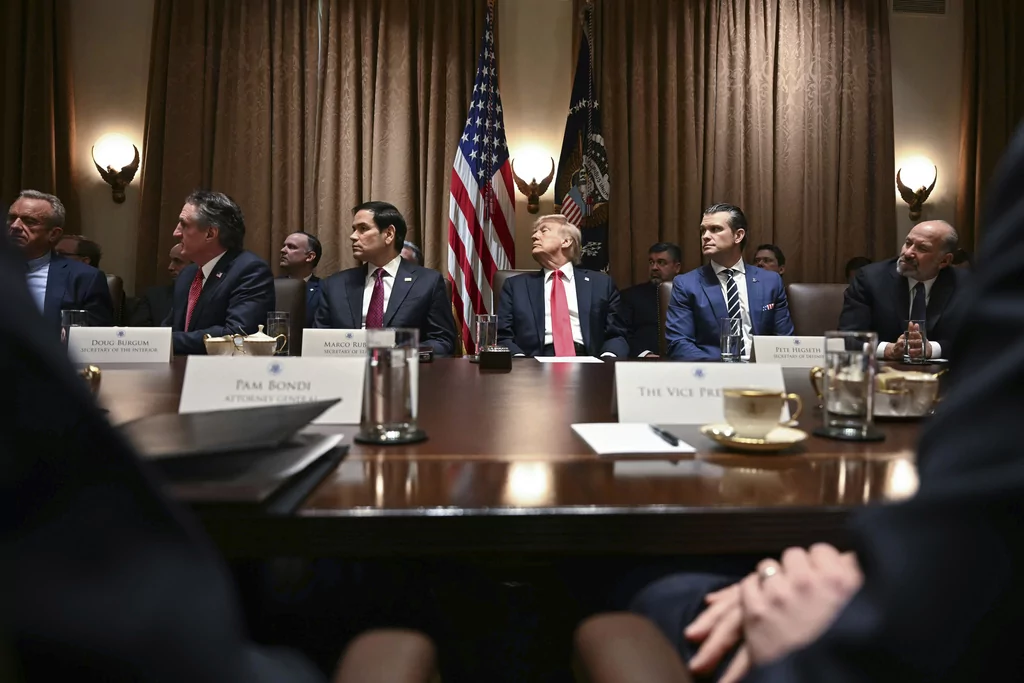
The visa program, Lutnick suggested, needs to be overhauled in order to “have a proper business.”
Trump made a similar argument during remarks in the Oval Office on in June, calling the EB-5 policy “full of nonsense, make-believe, and fraud.”
Unlike the EB-5 program, the president’s gold card proposal would not require gold cardholders to create a certain number of jobs.
“Not all these people are going to be job builders. They’ll be successful people, or they’ll be people that were hired from colleges,” Trump said. “I’ve had the complaint from a lot of companies where they go out to hire people, and they can’t hire them out of colleges. And you know what they do? They go back to India, or they go back to the country where they came from, they open up a company, and they become billionaires … and they’re employing thousands.”
What challenges could the gold card proposal face?
Because the genesis of the EB-5 visa program is rooted in the Immigration Act of 1990, Trump could run into roadblocks in implementing the gold card program over arguments that he does not have the authority to override an act of Congress. In 2022, Congress reauthorized the EB-5 program through 2027. It is unclear whether legal challenges could be made against a gold card program or whether such challenges could be sustained in court.
A push in the House to enshrine Trump’s proposal into law was killed in April as the House Judiciary Committee held talks debating provisions for his “one, big beautiful bill.”
“There was enough opposition to keep it out,” a GOP lawmaker said.
Alex Nowrasteh, the Cato Institute’s vice president for economic and social policy studies, previously told the Washington Examiner that Trump would likely need Congress to get involved in order to successfully create a gold card program — and now that the program is live, this could make the Trump administration vulnerable to legal challenges.
“Creating a brand new green card category and canceling another category is probably beyond the pale,” he said.
However, Trump could argue that a prior Supreme Court ruling handing the president certain immigration authorities gives him the legal precedence needed to enact the gold card policy, Nowrasteh added. In 2018, the Supreme Court handed Trump a legal victory in Trump v. Hawaii, which ruled the president had the right to impose a travel ban on five predominantly Muslim countries due to national security concerns.
“You can definitely read that decision as saying the president can basically block anybody who wants, or let in anybody who wants,” Nowrasteh said during an interview. “But it’s more likely that he definitely needs Congress” to create gold cards, he added.
Trump ran into legal challenges during his first term in office when he tried to revamp the EB-5 visa policy.
The president issued a number of reforms to the EB-5 program in 2019 that were later reversed or scaled back by the Biden administration. In June 2021, a federal court vacated the Trump-era reforms in a ruling that argued the Department of Homeland Security did not have the authority to execute the rules.
FIVE THINGS WE LEARNED FROM TRUMP’S FIRST CABINET MEETING WITH MUSK
Trump says he wouldn’t need congressional approval for the gold cards. He has justified his idea by saying it could grow the economy and create jobs.
“A lot of wealthy people will be coming into our country by buying this card,” he told reporters in the Oval Office. “They’ll be wealthy and they’ll be successful and they’ll be spending a lot of money and paying a lot of taxes and employing a lot of people.”