In Focus delivers deeper coverage of the political, cultural, and ideological issues shaping America. Published daily by senior writers and experts, these in-depth pieces go beyond the headlines to give readers the full picture. You can find our full list of In Focus pieces here.
President Donald Trump’s critics typically portray him as a violator of norms who undermines our system through rash and unprecedented actions. In truth, he often harms the country with bad ideas that have plenty of precedent in American politics and governance.
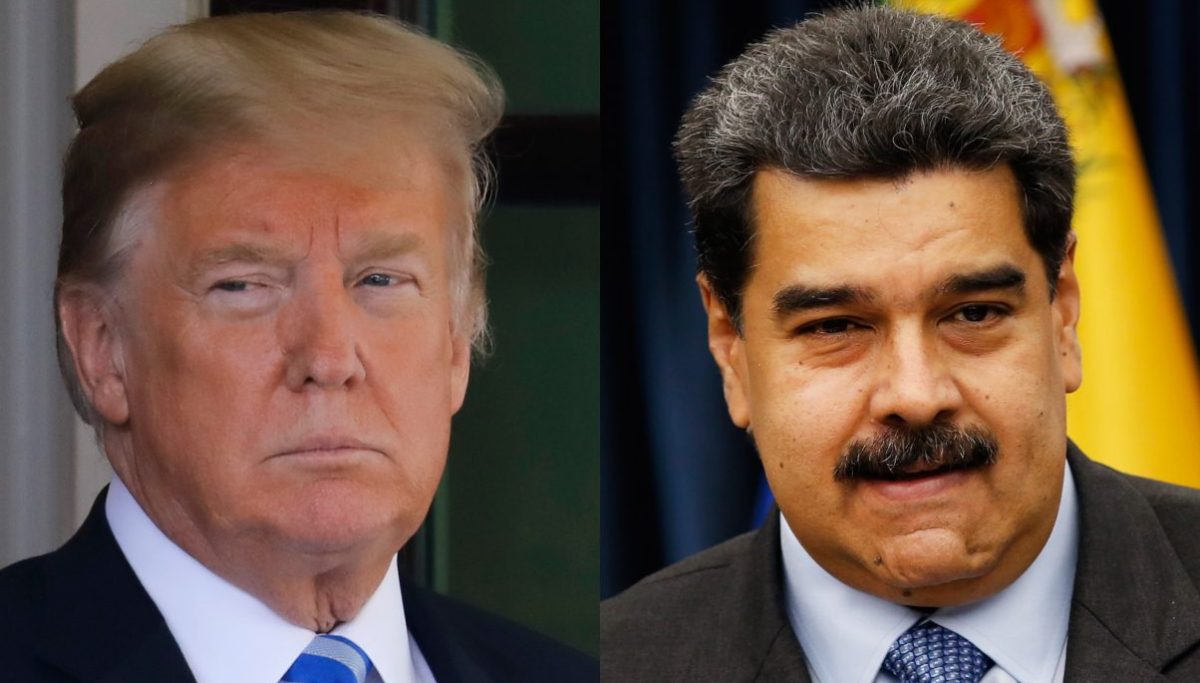
Recently, Trump has been hinting he is interested in regime-change war in Venezuela. He is typically unclear, but when asked if “[Nicolas] Maduro’s days are numbered,” the president said, “I would say yeah.”
VENEZUELA LAND STRIKES WILL START ‘VERY SOON’ TRUMP SAYS
It’s easy to conclude that Trump is on the march to Caracas, ready to unseat Maduro by force. For years, his administration has been branding drug cartels as terrorist entities. Again and again, Trump speaks with sincere anger about the damage done to this country by the cartels.
His Department of War has been droning suspected drug boats, killing at least 87 people across a dozen strikes. Trump likes talking tough. He loves having the military at his disposal. Could he really go two terms in office and never launch a real war?
On the other hand, it’s easy to brush off Trump’s talk as so much bluster. In his 10 years on the national political scene, he has never ruled out any idea presented to him. Also, his first-term foreign policy was distinguished by the fact that, unlike every other president since the Berlin Wall fell, Trump didn’t launch a war of choice.
Trump appears undecided on whether to pursue a regime-change war, and he has ample recent history to review as he weighs the decision.
From President George H.W. Bush’s war to depose Panamanian dictator Manuel Noriega through President Barack Obama’s war to depose Moammar Gadhafi — with some very notable instances in between — America’s post-Cold War history is a series of ill-conceived and ill-fated regime-change wars. It’s worth recounting that history now.
‘Operation Just Cause’: Panama
When the Berlin Wall fell in October 1989, the United States military, it seems, was unleashed to go abroad in search of monsters to destroy, to borrow a phrase from John Quincy Adams.
FULL LIST OF EXECUTIVE ORDERS, ACTIONS, AND PROCLAMATIONS TRUMP HAS MADE AS PRESIDENT
Two months after that symbolic collapse of Communism, the first President Bush invaded Panama in order to depose Manuel Noriega.
Noriega was a bad guy. He was a former CIA informant who had been an asset of the U.S. during the Cold War. But by 1989, he was a corrupt dictator who was ruining his country. Noriega’s party was set to lose a May 1989 election badly, and so they disrupted it and annulled it, hanging on to power through force.
Noriega, in a blustery speech on Dec. 15, declared that the U.S. and Panama were at war. The U.S. had more than 10,000 troops stationed in Panama at the time (we still controlled the Panama Canal Zone). The next night, during a contentious traffic stop, Panamanian soldiers fired on a car of off-duty, unarmed U.S. Marines, killing one of them, Lieutenant Robert Paz.
With that, Bush announced the invasion of Panama, with these stated goals: “to safeguard the lives of Americans, to defend democracy in Panama, to combat drug trafficking, and to protect the integrity of the Panama Canal Treaty.”
POLITICAL VIOLENCE ON THE RISE IN THE US: A TIMELINE OF KEY INCIDENTS
“Defend democracy in Panama,” meant capturing Noriega, deposing his political allies, and installing as president Guillermo Endara, who was understood as the rightful winner of the May elections.
Within two weeks, the U.S. overwhelmed Panama’s military and captured Noriega, later prosecuting and jailing him. He died in prison in 2017.
Mission accomplished, one could say. The bad guy was out of power and in prison. The killing of a U.S. Marine was avenged. The democratically elected president was in power.
But not everything went smoothly. Twenty-three soldiers died in the invasion, as did about 300 Panamanian civilians, according to U.S. estimates. Bodies were dumped in mass graves. Looting spread throughout the country. About 15,000 Panamanians lost their homes, mostly in the poor neighborhood of El Chorrillo, near Noriega’s compound.
Bush stretched presidential war powers by launching a full-scale invasion without Congressional approval. While most Panamanians supported the invasion at the time, decades later, the invasion is seen as a black mark. It’s a common claim that the actual number of Panamanian deaths was 3,000, not 300. December 20 is legally now a day of mourning in Panama, and our forcible regime change is seen as a sign that the U.S. is an imperial threat.
Operation Enduring Freedom: Afghanistan
After al-Qaeda terrorists killed 3,000 Americans on September 11, 2001, Congress authorized the use of force against those responsible. In practice, this meant invading Afghanistan and deposing the Taliban government, which was harboring al Qaida and Osama bin Laden.
In about a month, the Taliban was dismantled. In December, a U.N.-backed interim government was erected under the leadership of Hamid Karzai.
What followed was 20 years of U.S. occupation, followed by a deadly and embarrassing retreat and a return of Taliban rule.
DEMOCRATS NEED TO TEMPER THEIR EXPECTATIONS OF A 2026 BLUE WAVE
Afghanistan now ranks as the worst place to live in the entire world, according to the World Happiness Report, and it is in the bottom 10% of the world, according to the U.N.’s Human Development Index.
The Special Inspector General for Afghanistan Reconstruction, in its final report this month, reported that the U.S. spent about $145 billion trying to nation-build in Afghanistan, “far more than it spent on the post-World-War-II Marshall Plan in inflation-adjusted terms.” That $145 billion is on top of the $1 trillion in military expenditures for the war and occupation.
At least 17 cents of every rebuilding dollar was identified as “waste fraud and abuse” by SIGAR. “Despite spending $7.3 billion on counternarcotic programming, Afghanistan was the world’s largest opium supplier at the time we wrote our report, producing more than 90 percent of the world’s opium in 2018.”
Here’s another gem: “DOD spent $486 million to procure 20 G-222 aircraft for the Afghan Air Force that did not meet operational requirements. The planes were barely flown, and 16 of them were sold and scrapped in Afghanistan for approximately six cents per pound, totaling $32,000 repaid to the U.S. government.”
About 2,000 U.S. troops were killed in action in Afghanistan, and about 800,000 men and women spent holidays and birthdays and graduations away from their families over two decades and millions of deployments.
Operation Iraqi Freedom
Declaring that “freedom is the Almighty God’s gift to each man and woman in this world,” President George W. Bush saw himself as the man to deliver that gift by F-16, M-1 Abrams, and Hellfire missiles.
As in Panama and Afghanistan, the U.S. was able to march on Baghdad pretty quickly. From Shock-and-Awe (the initial bombing campaign) to the toppling of Saddam Hussein’s statue in Baghdad, it was only three weeks. A few weeks later, President Bush spoke on an aircraft carrier with a banner behind him reading “Mission Accomplished.”
About 4,500 American soldiers, sailors, airmen, and Marines died in the Iraq War, which cost taxpayers more than $700 billion at least.
The war destabilized the region, aided Iran, and helped create ISIS.
HEGSETH SLAMS BIDEN’S ‘KID GLOVES APPROACH’ TO NARCO-TERRORISM IN DEFENSE OF DRUG BOAT STRIKES
“The reason ISIS exists is because the George W. Bush administration introduced U.S. forces into Iraq in the first place,” states Andrew Bacevich. “The Iraqi government we’ve created, the Iraqi army that we’ve created has proven itself unable to cope with the instability we created. ISIS is simply a symptom, or a manifestation of that instability.”
The war helped destroy George W. Bush’s presidency and the Republican Party. This led to a Democratic takeover of Washington in 2006 and 2008, leading to Obamacare, and eventually Donald Trump’s takeover of the GOP.
But let’s not skip past the Obama years.
Libya
President Barack Obama knew the Iraq War was a mistake. He campaigned for Senate in 2006 on that position, and it was part of his 2008 campaign for the White House.
But apparently, Obama thought the problem with Iraq was that we stuck around to try and fix what we had broken.
So when Moammar Gadhafi in 2011 was murdering political opponents, Obama didn’t even ask for congressional approval. He got some NATO allies to sign on, and then launched a drive-by war.
He did the same sort of “Mission Accomplished” touchdown dance Bush had done. “President Obama enlisted our allies, built the coalition, shared the burden, so that today, without a single American casualty, Moammar Gadhafi is gone, and the people of Libya are free,” Sen. John Kerry (D-MA) said in his prime-time speech at the Democratic Convention in 2012.
“From Burma to Libya to South Sudan,” Obama crowed at the same convention, “we have advanced the rights and dignity of all human beings.”
A few weeks later, four Americans died as militants stormed a U.S. diplomatic facility in Benghazi. Libya soon became a chaotic hellhole overrun by every sort of terrorist and Islamic extremist imaginable.
“There is no overstating the chaos of post-Qaddafi Libya,” wrote veteran war journalist Jon Lee Anderson. “Two competing governments claim legitimacy. Armed militias roam the streets. The electricity is frequently out of service, and most business is at a standstill….”
The chaos, terrorism, and Islamic extremism that Obama created in Libya have since spread across the continent.
TRUMP PARDONS AND COMMUTATIONS: NOTABLE ACTS OF CLEMENCY IN HIS SECOND TERM
Military coups have overrun the governments in Mali, Niger, and Burkina Faso. These are all downstream from Obama’s drive-by regime-change war.
Nick Turse at the Intercept explained: “In 2011, when a U.S.-backed uprising in Libya toppled autocrat Muammar Gaddafi, Tuareg fighters in his service looted the regime’s weapons caches, traveled to their native Mali and began to take over the northern part of that country. Angered by the ineffective response of his government, Amadou Sanogo … took matters into his own hands and overthrew his country’s democratically elected government.”
Similar stories have played out in neighboring countries. Africa is now less safe, less stable, and less democratic thanks to Obama’s regime-change war in Libya.
The lesson
All of these regime-change wars accomplished their primary objective: Deposing the bad guy. Noriega, Mullah Omar, Hussein, and Gadhafi are all dead. These were dictators who harmed their own people, and in some cases, indirectly harmed the United States.
But eliminating an evil government typically creates a vacuum, and something worse fills that vacuum. In the three 21st-century regime changes, this has certainly been the case.
LIBYA’S CHAOS IS OBAMA’S SHAME
It’s hard to say the world would be better off if these dictators were still in charge, but it’s easy to see the cascade of evils that followed from their forcible removal.
It’s a lesson Trump seems to have known at some point. One wonders if he will apply it to Venezuela.