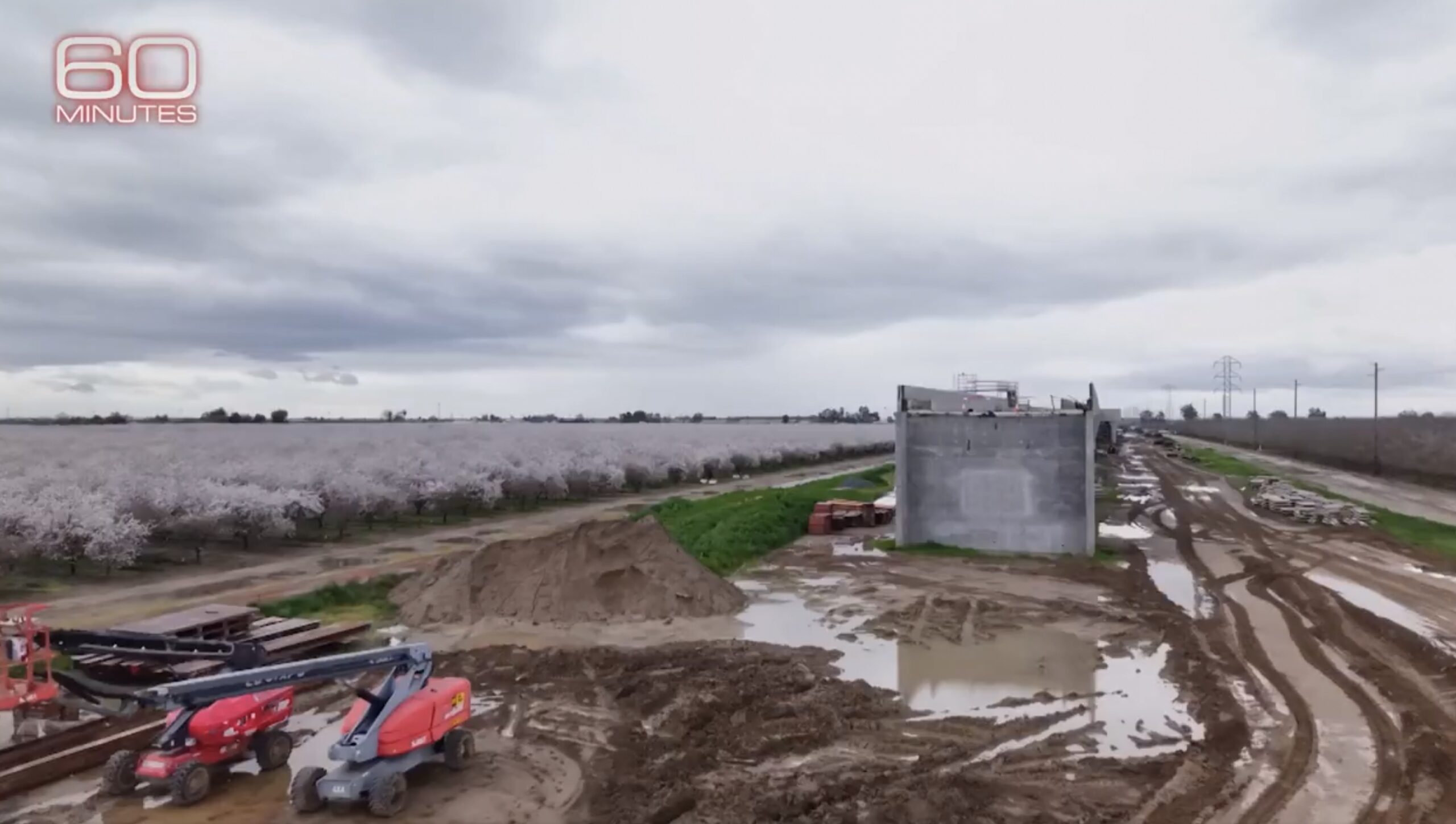
California is 11 years deep into active construction on a project to build a high-speed rail connection between Los Angeles and San Francisco, and it’s such an overpriced and unsuccessful disaster that even the rigidly left-wing 60 Minutes managed to notice.
But they didn’t even come close to seeing the scale of Gavin Newsom’s disaster. As The Federalist reported a month ago, California is trying to save the project by “gradually turning high-speed rail into not-high-speed rail,” revising construction plans to add cheaper sections that will make the system much slower if it ever gets fully built. Almost 20 years after the project began, and more than a decade into active construction, they aren’t trying to build the promised Los Angeles-to-San Francisco line.
Instead, they’re just trying, slowly, to build an initial 119-mile “core” route through part of the Central Valley, for tens of billions of dollars. I climbed a piece of that core last year and took pictures, if you want to see what 10 years of construction looks like in a deep blue state.
But the second thing to understand about California’s fantasy bullet train is that it’s not an anomaly. There are major infrastructure projects all over the state that don’t begin to pass the smell test. Last year, Colorado opened a wildlife bridge to give animals a safe way to cross a freeway. It cost $15 million and took eleven months to build.
California’s current effort to build a mountain lion bridge across the 101 Freeway in suburban Los Angeles is far from finished, after four years of construction, and the final cost is now estimated to be somewhere in the neighborhood of $114 million. California’s cost overruns exceed the whole value of Colorado’s entire bridge, and the thing has turned into a free money distribution project.
Critics point to similar stories all over the state. A book about the Bay Area-adjacent SMART train, connecting Sonoma and Marin Counties with 48 miles (and counting) of conventional track, is called The Great Train Heist. You can get a sense of the argument just from seeing the response to it. The book says the system will cost a billion dollars, but only serves about 3,000 riders a day. In an article published in February, the chairman of the SMART oversight board proudly called that ridership number a lie, because “over the past year, it’s closer to 4,500.”
The population of Sonoma County is just under half a million people, while the population of Marin County is around 265,000. A billion-dollar regional rail system, built in part through local tax increases, carries 4,500 people a day through a pair of counties with 765,000 people. You can do the math. The defense of the system by its advocates is about as damning as the attack.
Other giant projects are probably coming, and you can look at the past to make guesses about the future and see the likelihood of on-time completion or completion within a budget. Cliff erosion is threatening the San Diego portion of the Los Angeles-San Diego-San Luis Obispo (LOSSAN) rail corridor, so the regional San Diego Association of Governments is in the planning stages for a new route. One of the proposals: a $4 billion tunnel under a couple of miles of the suburban city of Del Mar. Engineers have started drilling core samples to plan for the work.
Critics of the project start by doubting the $4 billion figure, guessing the real final cost will be five times higher, but then they also count passengers: “Daily ridership for the three train services operating along the 65 miles from San Diego to San Clemente is tiny, currently only about 4,000 1-way trips per day. $5 million per 1-way trip ($20 billion/4,000) is a breathtaking boondoggle — even in California, a state known for its transit boondoggles.”
If the cost-versus-value problem never quite makes sense, look at it from a different angle. The California High-Speed Rail Authority regularly and proudly celebrates its project as a way of handing out money:
The trains don’t exist, and neither do the tracks, but union members pay their mortgages with money from the eternally incomplete construction of the hypothetical system. It works at something; just don’t expect it to work when it comes to carrying people from one place to another place. This is the California way, and the whole country can live like this by electing Gavin Newsom to the presidency.